What Is a PCC Panel? Full Form, Components & Working


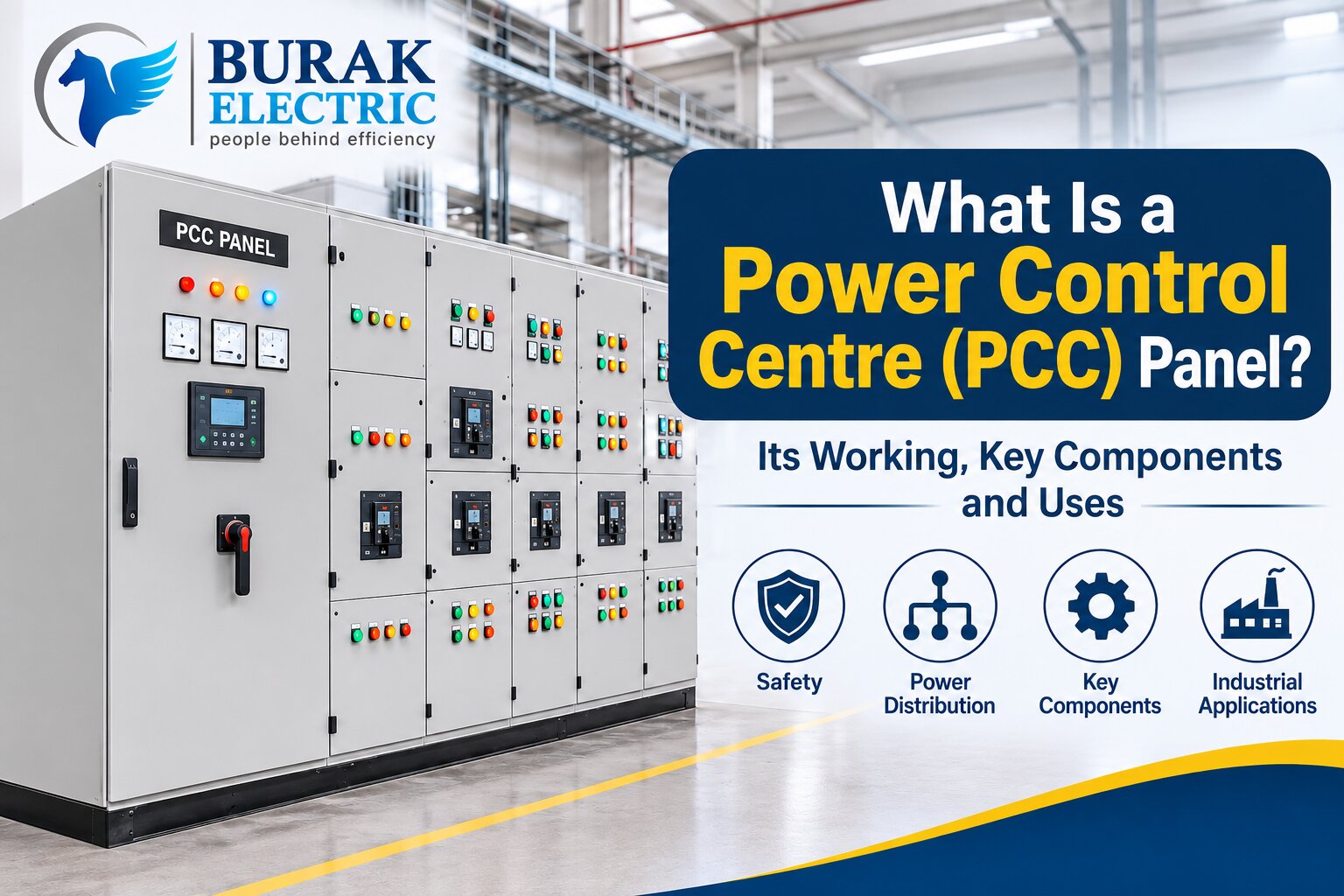 In factories, hospitals, and data centres, electrical systems require a reliable way to control and distribute high-capacity power. A Power Control Centre (PCC) panel performs this role. It supplies electricity to different equipment, including motors, lighting systems, and industrial machines.
This article explains what a Power control panel is, how it works, its key components, and where it is used, in simple terms.
PCC stands for Power Control Centre. This panel takes the high currents from your transformer or generator and safely distributes them to the rest of your plant.
In simple terms, this panel acts as the central point of your plant's electrical system. Like a main entrance to a housing society, everything going in gets checked, and everything going out gets controlled.
Sometimes referred to as a main PCC panel or power control cabinet.
The incoming electrical supply needs proper control and protection before it reaches industrial equipment. A Power Control Panel helps distribute electricity safely to different machines and electrical systems.
Here is what it does every day:
The Power control panel generally serves as the main low-voltage power distribution panel in an industrial facility. It supplies power to downstream panels such as Motor Control Centres (MCC) and distribution boards.
This follows the IEC 61439 standard internationally. In India, we follow this standard using IS/IEC 61439 via the Bureau of Indian Standards. Power control panels should comply with the applicable requirements of IS/IEC 61439. Manufacturers should provide relevant design verification and routine verification documentation.
There are 6 key components to a Power Control panel. These are: incomer, busbars, feeders, protection relays, metering, and enclosure. Below is a picture showing each component.
-1794390081849.jpg)
1. Incomer (ACB) – Acts as the main breaker to turn your incoming supply on/off. Often uses air circuit breakers due to very high currents.
2. Busbars – These are copper or aluminium bars that provide the current to all feeders. Copper has higher electrical conductivity than aluminium. Aluminium has approximately 61% of the electrical conductivity of copper.
3. Feeders – Provide the current to your motors, MCC, and transformers. These use MCCBs or ACBs and have their own protection.
4. Protection relays – These digital devices will detect when there is an overcurrent, earth fault, or short circuit and trip the breaker.
5. Metering – Current transformers, ammeters, voltmeters, and multifunction meters are used to show live values.
6. Enclosure – Is made using powder-coated sheet steel. The IP rating will tell you how dust/water proof it is. This follows IEC 60529.
Other components include earthing bars, indicator lamps, and control wiring.
If you’d like to see these components in a real-life unit, please visit our PCC panel product page.
How Does a Power Control Panel Work?
The power comes in via the receiver, passes through the busbars, and is then sent out via the feeders. The relays will provide protection.
Let’s break it down into 5 steps.
1. Power comes in – The power comes in from your transformer or generator to the incomer.
2. Incomer closed – The main breaker is turned on, providing power to the busbars.
3. Busbars distribute – The current is distributed along the busbars to all outgoing feeders
4. Feeders provide power – Each feeder provides measured power to your load (MCC, motor, transformer).
5. Protection relays – If the current goes above a safe level, the relay will trip the breaker, providing protection.
Depending on the fault, the protection can happen in a matter of seconds. It is therefore important to ensure that the relays are set correctly. After any changes to the load, the relays should be reviewed.
A well-designed electrical Power Control Panel will also provide protection to the good parts of your plant.
The PCC panel provides distribution of bulk power, whereas the MCC provides starting/stopping and protection of individual motors. The MCC will be fed from the PCC. Like the main water pipe feeding your taps at home.
Often both panels will be used within a plant. The PCC will deal with your incoming power and large loads, whilst the MCC will look after areas of your plant with lots of motors.
This refers to how much separation there is between the components within the panel. This helps protect against faults spreading and provides protection when servicing. There are 4 main forms of separation following IEC 61439.
Form 1 – No internal separation.
Form 2 – Separation of busbars from functional units.
Form 3 – Separation of busbars from functional units, with separation between individual functional units as specified by the selected Form 3 arrangement.
Form 4 – Separation of busbars, functional units and outgoing terminals, including separation between individual functional units.
Higher forms of separation generally provide greater segregation between panel compartments and can support safer maintenance. However, the actual level of protection depends on the panel design and applicable safety procedures. Often a worthwhile investment for critical plants.
Ensure you choose a panel based on your load. Make sure the panel has the right current rating, fault level, and follows the correct standards.
Invest in a reliable Power Control Panel. Often, cheaper panels can be more expensive due to downtime.
There are 3 key mistakes you can make with your panel. These are undersizing, overheating, and not having drawings/test reports. These can be easily fixed at an early stage but can be expensive to fix.
Undersizing the busbars/incomer will leave you with no expansion. Poor ventilation will cause overheating and cause your insulation to age. No drawings/test reports will cause lengthy and frustrating repairs in the future.
Don’t ignore the warning signs like you would with your car's engine.
Anywhere with large loads where you want to safely distribute the power. Factories, Refineries, Hospitals, Malls, Data Centres, and Utilities. As long as you have a transformer, you’ll often have a PCC.
Hospitals and data centres often have an extra feed from a standby generator. This means you’ll need an interlock.
India has safety regulations for electrical installations set by the Central Electricity Authority. It is therefore important that your Power Control Panel follows these regulations.
Regularly inspect your Power control panel. Common issues are dust, loose joints, and overheating.
Good practices to follow are thermal imaging to detect hotspots, torque-checking connections, cleaning, and checking the relays. Maintenance should be performed by qualified electrical personnel after proper isolation, lockout/tagout, and verification that the equipment is de-energised.
What is a Power Control Panel?
This is a steel cabinet that takes in your power, protects it using breakers, and distributes it to various loads. A Power Control Panel acts as your plant's electrical traffic policeman.
What does PCC stand for on electrical panels?
PCC stands for Power Control Centre. This is the main panel that feeds your MCCs, distribution boards, and large machines.
What standard do power control panels follow in India?
PCC panels in India should comply with the applicable requirements of IS/IEC 61439 for low-voltage switchgear and controlgear assemblies. Ask your supplier for relevant design verification and routine verification records.
How long will my Power Control Panel last?
This will depend on your load, environment, and how well it is maintained. If regularly maintained, your panel can last many years.
Where Is a Power Control Panel Located within a Plant?
Straight after your transformer or generator, before your MCCs and distribution boards.
A PCC panel (Power Control Centre) is the main cabinet of your plant to take in, protect, and distribute your electricity. This panel has 6 Main Components: incomer, busbars, feeders, relays, metering, and enclosure. The power goes through 5 stages, and you choose the right panel based on current rating, fault level, IS/IEC 61439, IP rating, and extra capacity. Regular maintenance is required.
Looking to design a new plant, expand your facility, or replace an old board? Burak Electric provides Power Control Panels for industrial power distribution and electrical control applications. Our team can help you select a suitable PCC panel based on your electrical load and installation requirements. Perfect for factory owners, EPC Contractors, Consultants and Facility Managers.

Modern industries rely heavily on automation to boost operational speed, reduce errors, and ensure consistent output. At the center of these systems is a critical component known as the PLC Control Panel. Designed to manage and automate industrial equipment, these panels handle everything from routine machine tasks to advanced process control. Gaining a clear understanding of how PLC Panels function and selecting the right PLC Panel Manufacturer can make a big difference in improving efficiency, safety, and productivity across any industrial setup.

Looking to simplify motor operations, enhance safety, and cut downtime? A Motor Control Center (MCC) is your ultimate power management solution. In this blog, discover how MCCs work, their components, types, and why Burak Electric’s panels are engineered for performance, safety, and smart automation.

MCC (Motor Control Centre) and PCC (Power Control Centre) panels play a pivotal role in industrial power management, ensuring efficient motor control, power distribution, and enhanced safety. MCC panels centralize motor control, providing real-time monitoring and protection against faults, which improves operational efficiency and reduces downtime. On the other hand, PCC panels manage power distribution across industrial systems, safeguarding against overloads and ensuring continuous, stable operation.
 - Explained -1769065046520.jpg)
In modern industrial plants, electric motors operate continuously to power pumps, compressors, conveyors, and heavy machinery. The smooth, safe, and controlled operation of these motors is critical for maintaining productivity and avoiding costly downtime. When a motor control system is unreliable, it can lead to equipment failures, operational delays, and serious safety risks.
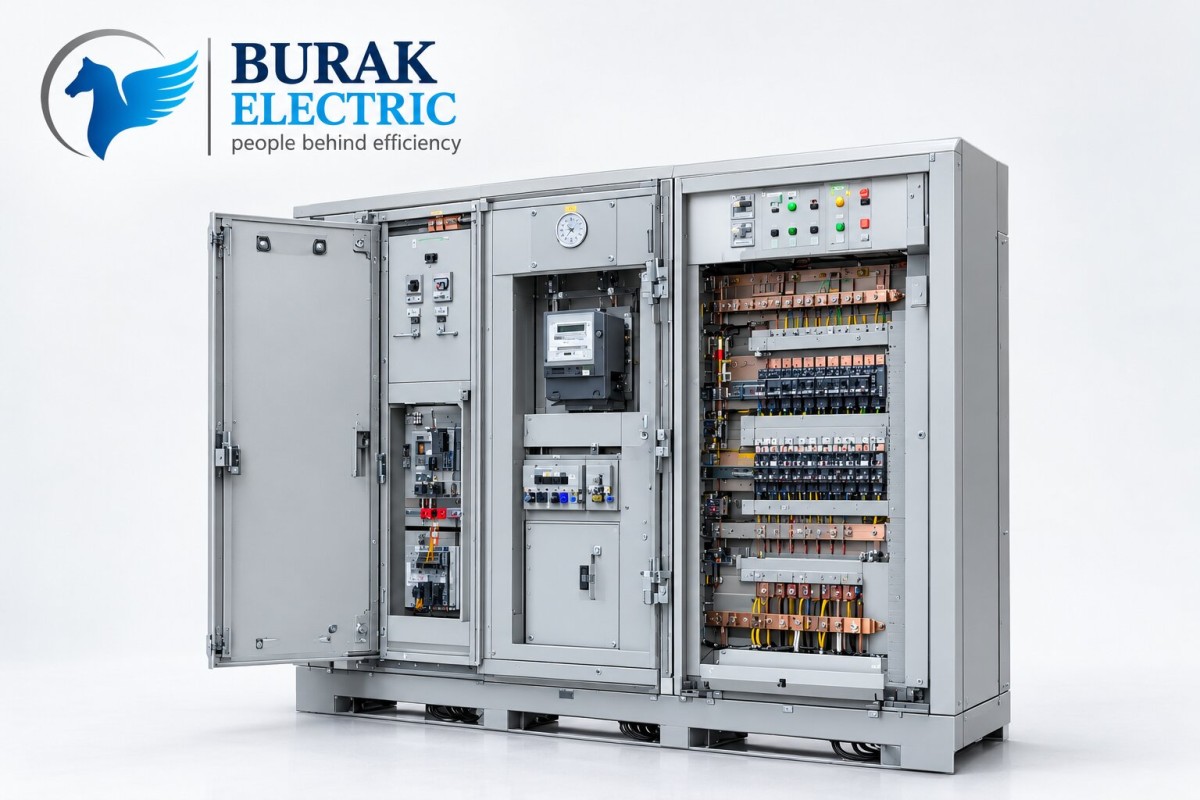
An LT panel is a Low Tension switchboard, receiving power from a transformer and dividing the power to protected circuits. These LT panels are used at all factories, hospitals, malls, and housing societies, though few people might know about this.
-1793426619514.jpg)
MDB stands for Main Distribution Board. It is a key component of an electrical power distribution system that receives incoming power and distributes it to downstream distribution boards and electrical loads.
-1793709426989.jpg)
An MCC panel (Motor Control Center panel) is a factory-assembled, floor-mounted electrical assembly containing motor starters, circuit breakers, and control equipment connected through a common power bus. It enables industrial plants to start, stop, protect, and monitor multiple electric motors from a central location. In water treatment plants, cement factories, and food processing units, you will often find rows of electrical cabinets operating motors and supporting daily operations. That is one MCC panel that's doing the work. Nobody applauds it, but nothing can work without it. It surely should be acknowledged by the maintenance team.
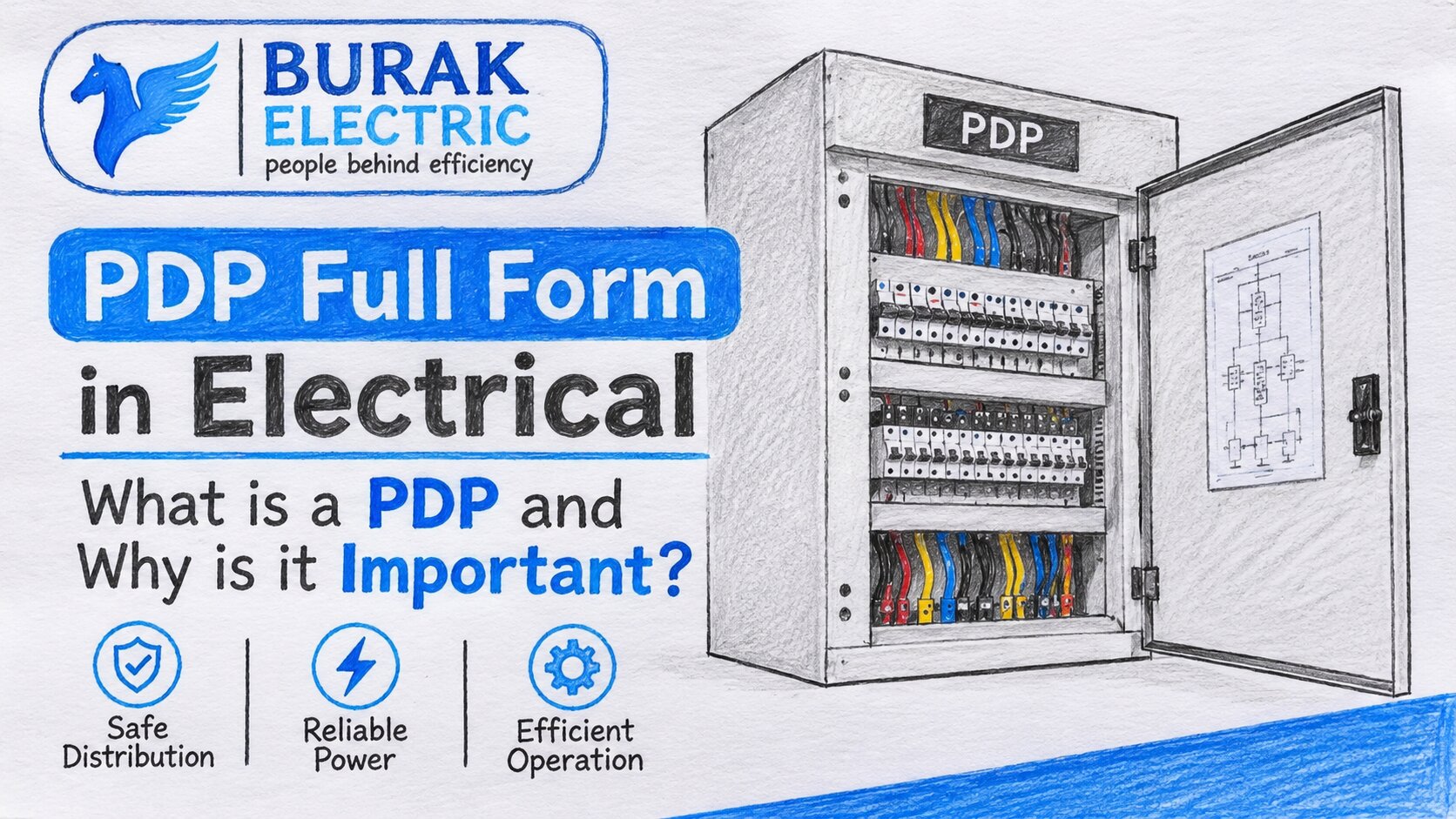
Have you ever noticed one of those metal boxes in a building with a tonne of switches in? This is likely to be a distribution panel. The terminology can get confusing, with almost everyone getting confused by the PDP, PDB, and MDB terms. Let’s sort it out. This box helps keep your building running smoothly. You’ll find an overview of what the PDP full form means and everything you need to know to select the correct setup.
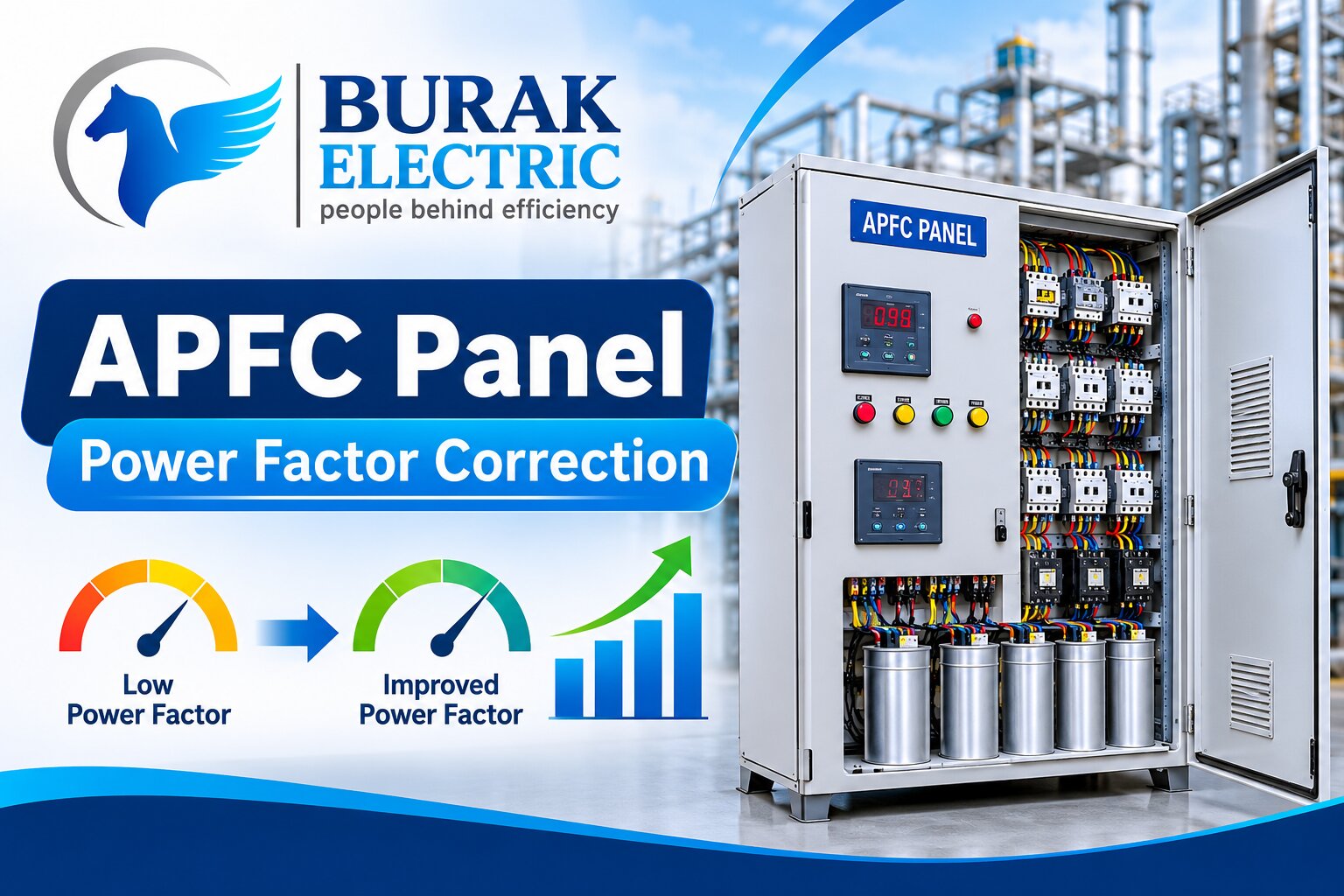
An APFC panel is an electrical cabinet that automatically switches capacitor banks to improve your plant's power factor, bringing it closer to the desired value. APFC stands for Automatic Power Factor Correction. Think of it as a thermostat, but for reactive power! This guide explains how an APFC panel works, the cost involved, and who needs one. This will explain everything in plain English with no jargon.